
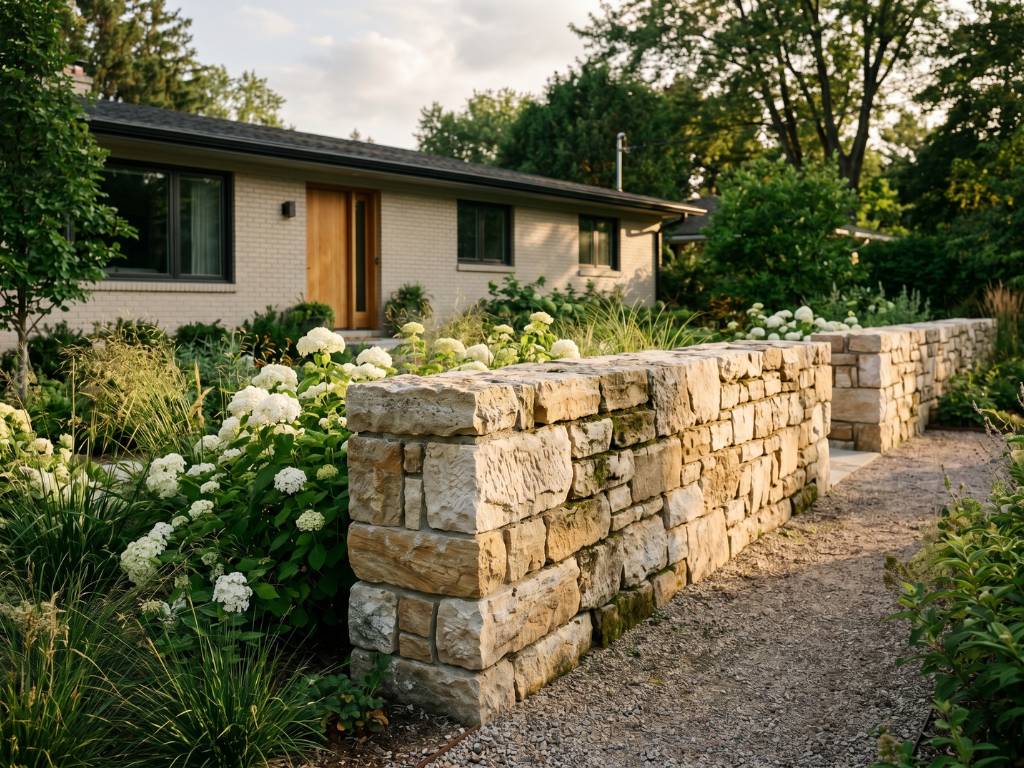
Natural Stone Veneer
Thin natural stone faced over reinforced concrete core. The look of solid masonry with engineered structural capacity. Irregular texture, warm tones, and timeless character for residential gardens and entry features.
Engineered retaining walls and terraced installations for sloped and multi-level properties. Natural stone veneer, engineered block, and integrated drainage — designed to outlast the soil they retain.
Most retaining walls collapse not from the front, but from what's invisible: trapped water with no drainage, uncompacted soil, and geogrid skipped to cut costs. A properly built wall is a hydraulic system as much as a structural one.
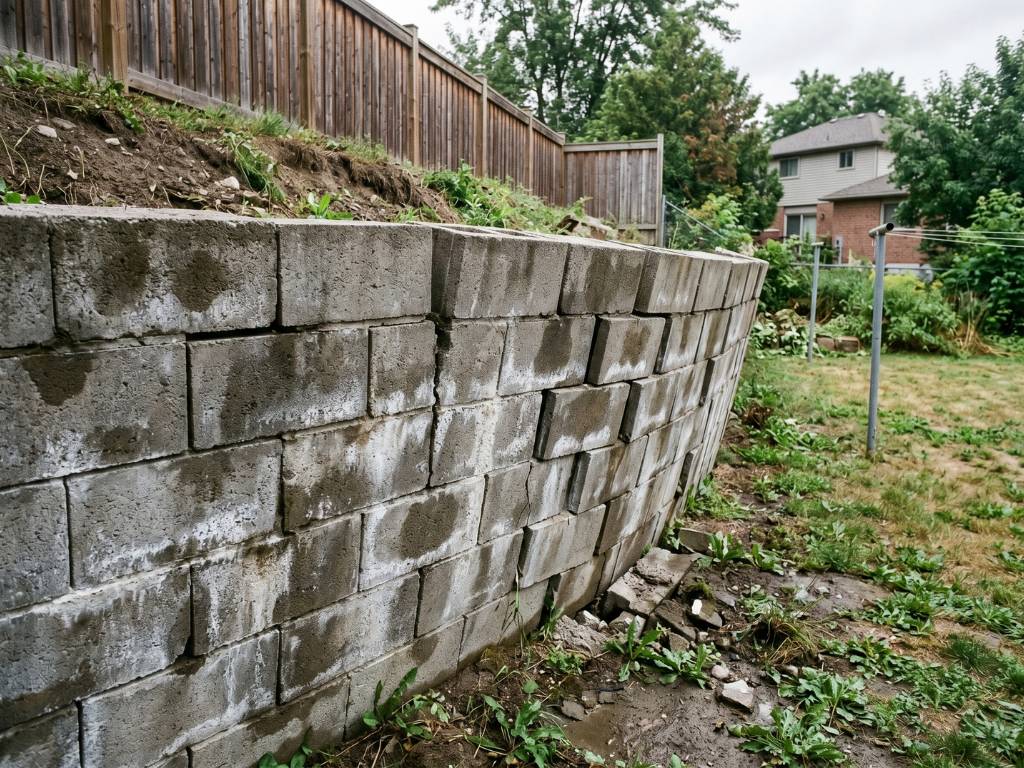
Each technique solves a different challenge of slope, aesthetics, and load. We assess your soil, your grade, and your architecture before recommending.
Thin natural stone faced over reinforced concrete core. The look of solid masonry with engineered structural capacity. Irregular texture, warm tones, and timeless character for residential gardens and entry features.
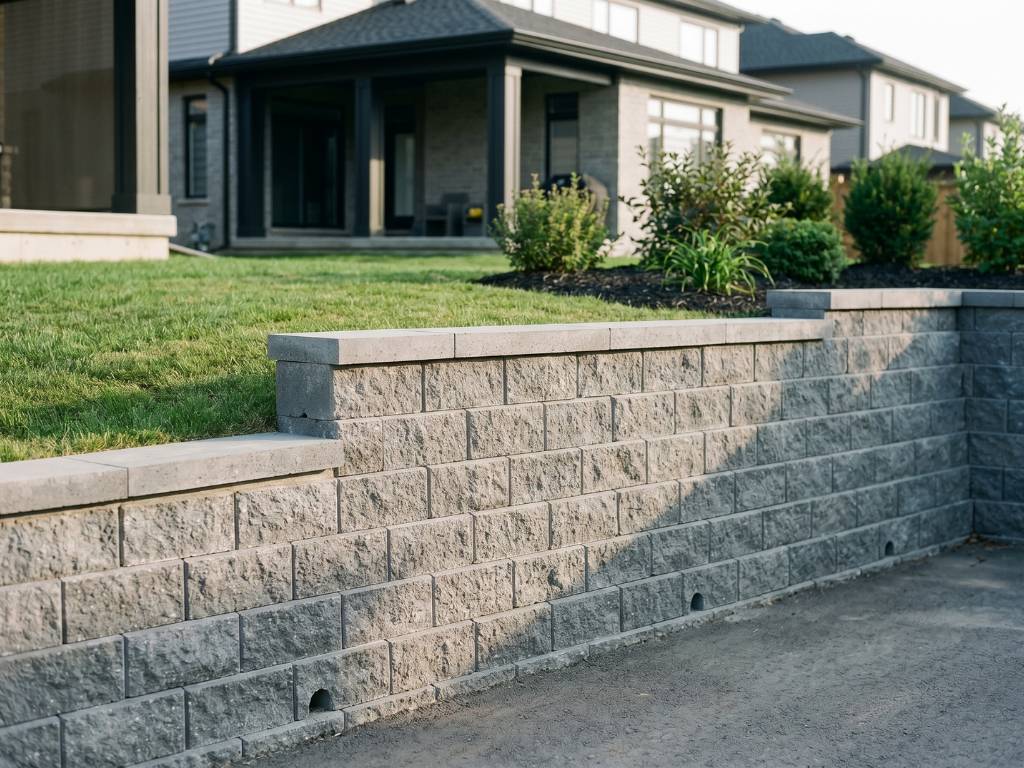
Modular concrete block systems with built-in setback, pin connection, and hollow-core drainage. Reinforced with geogrid layers and compacted granular backfill. The structural choice for slopes over 1.2m.
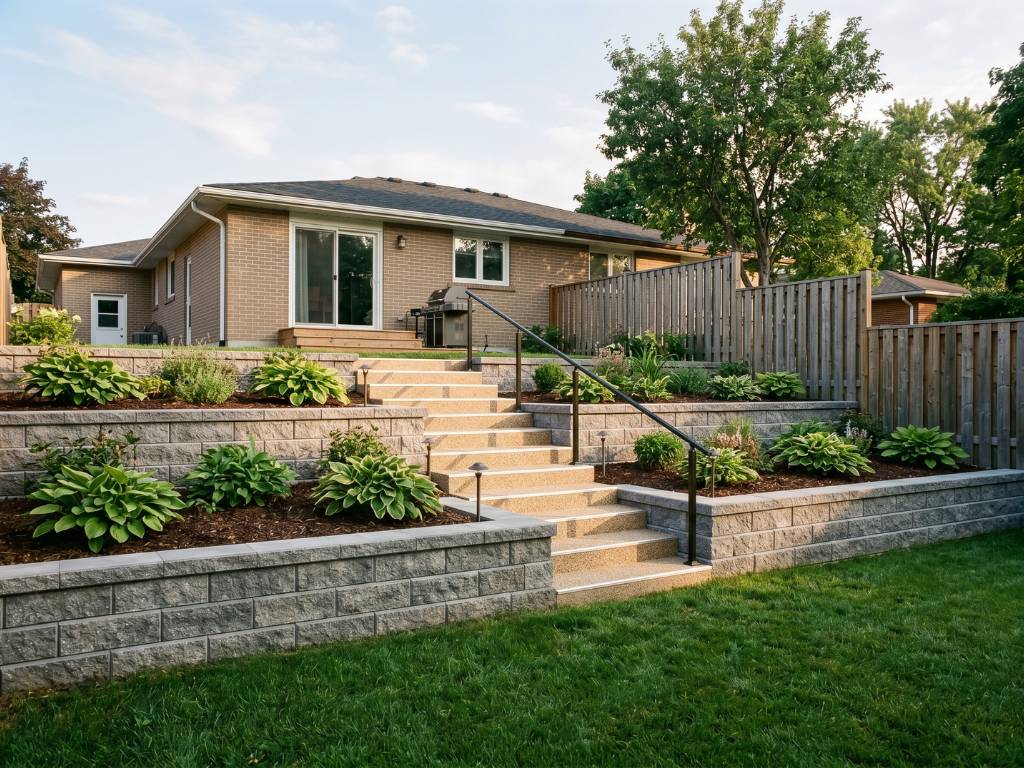
Multiple low walls creating flat usable levels on steep slopes. Each terrace becomes a garden bed, patio, or lawn. Reduces total wall height, improves drainage, and transforms unusable hillside into outdoor living space.
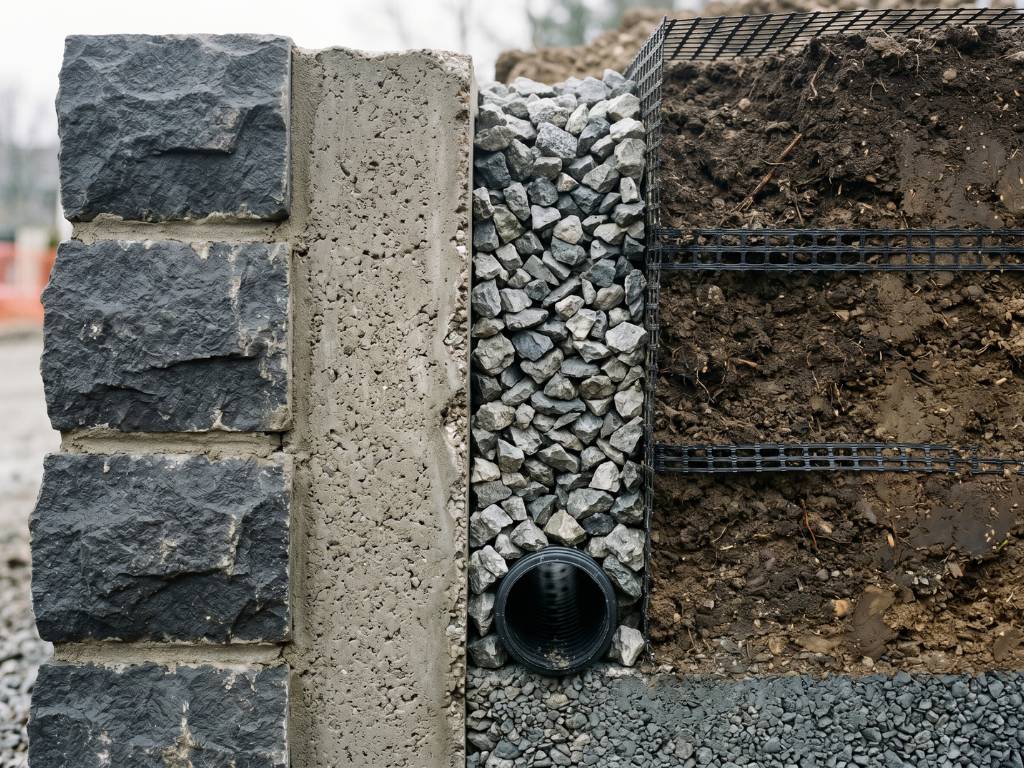
Most clients (and contractors) only see the front of the wall. But 80% of the engineering is behind it: drainage, geogrid, compaction, and setback. If any of these fails, the wall fails. We don't skip layers.
Stone veneer or engineered block — the visible architectural layer. Chosen for aesthetics and structural capacity.
Reinforced concrete core (veneer) or solid block mass. Coping cap sheds water and prevents freeze-thaw damage at the top course.
12" clean crushed stone with perforated drain pipe at footing. Gravity-fed to daylight or storm connection. The layer that prevents 85% of failures.
Biaxial geogrid layers every 2–3 courses, extending 60–100% of wall height into compacted granular backfill. Ties the wall to stable soil.
Levelled and compacted granular footing (minimum 6"). Below frost line. First course bedded in mortar or levelling pad for plumb and level.
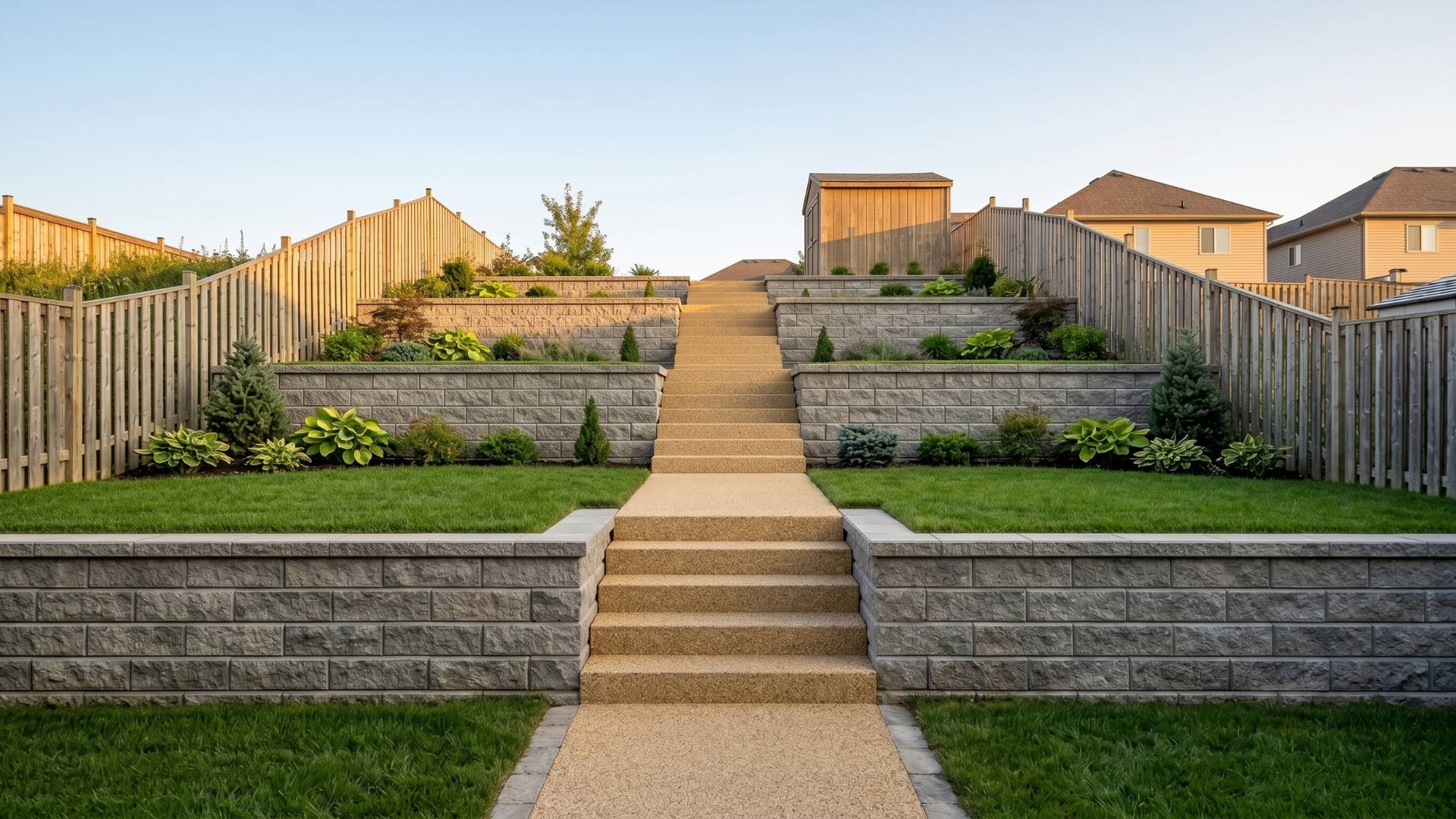
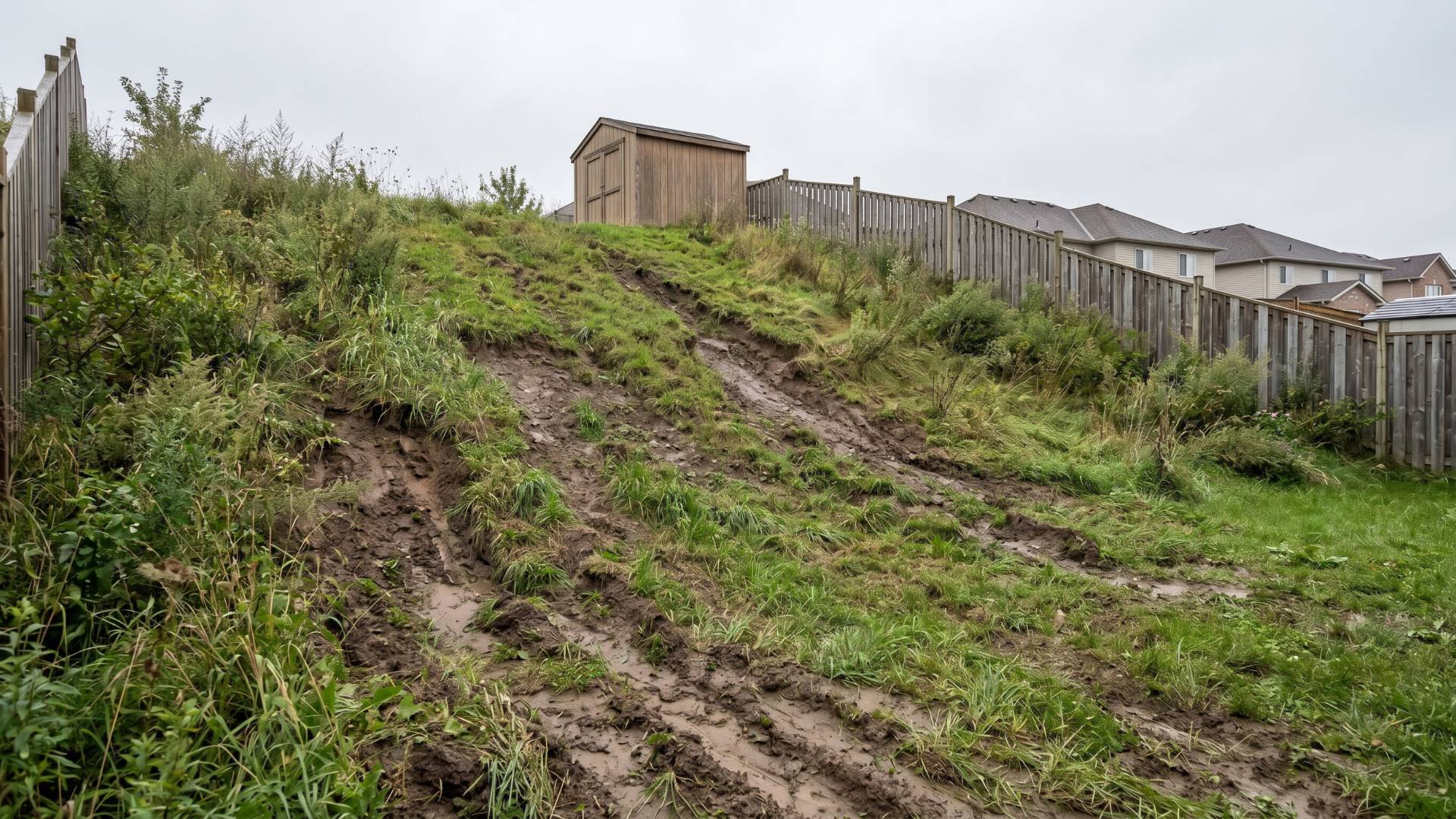
A Burlington hillside losing soil and unusable for anything but weeds. Drag the handle to see the transformation: three terraced levels in engineered block, integrated planting beds, and resin stone walkways tying each level together.
Every retaining wall begins with soil and slope analysis. We engineer for the load, permit for the height, and build for the decades — not just the season.
Slope measurement, soil classification (clay vs. granular), and load assessment. We identify drainage patterns and frost depth before design begins.
Structural calculations, geogrid layout drawings, and drainage plans. Permits obtained for walls over 1m or within 1m of property line.
Cut to depth, compact footing, install perforated drain pipe with clean stone backfill. This invisible layer determines whether the wall lasts 5 years or 50.
Levelled first course, pin-connected subsequent courses, geogrid layers every 2–3 courses extending into compacted backfill. Laser-levelled for plumb and batter.
Cap course with adhesive, final backfill compaction, topsoil and planting. Resin stone walkways or patio installation if part of the landscape plan.
In Ontario, walls over 1 metre (3.3 ft) or within 1 metre of a property line typically require a building permit. We handle soil assessment, engineered drawings, and permit submission as part of our service. Walls under 1m may still need approval depending on municipality — we verify this during the site survey.
With proper drainage and geogrid reinforcement, 50+ years. The block itself is concrete and does not degrade. What fails is the drainage — when clogged, water pressure builds and pushes the wall forward. Our 25-year lifespan covers both structure and drainage performance, and we inspect at year 5 and year 10.
Absolutely — and we encourage it. Low-voltage LED strip lighting in cap courses, integrated planter boxes between terraces, and resin stone steps connecting levels are standard in our terraced designs. The wall becomes part of the outdoor living system, not just a structural element.
Yes — in fact, terraced walls + resin stone patios + walkways is our signature combination. The wall creates flat usable space; the resin stone surfaces connect each level. One team, one warranty, one cohesive design. We often quote hillside transformations as a single integrated project.
Halton · Oakville · Burlington · Milton
Every hillside is a design opportunity. We measure the angle, test the soil, and engineer a wall that holds — beautifully.
Soil test, angle measurement, and drainage assessment — on your schedule.
Structural drawings, permit submission, and material samples.
Vuba Stone certified team, 25-year structural lifespan, signed by David.